The Ultimate Guide to Diamond Engagement Rings
Few purchases carry as much emotional weight as an engagement ring. It’s a symbol of commitment, a piece of jewelry that will be worn every single day for decades, and often one of the largest purchases a person makes before buying a car or a home. I’ve spent years helping people sort through the noise around diamond rings, and the truth is that most of the advice out there either oversimplifies the process or tries to upsell you on things that don’t matter. This guide to diamond engagement rings is built to give you the real, practical knowledge you need to choose a ring that looks stunning, holds its value, and doesn’t drain your savings account. Whether you’re shopping for a natural stone or considering a lab-grown alternative, the goal is the same: understanding what actually affects how a diamond looks on someone’s hand, and where you can save money without anyone ever noticing. I’ll walk you through quality grading, shapes, settings, metals, budgeting, and long-term care so you can buy with genuine confidence.
Understanding the Four Cs of Diamond Quality
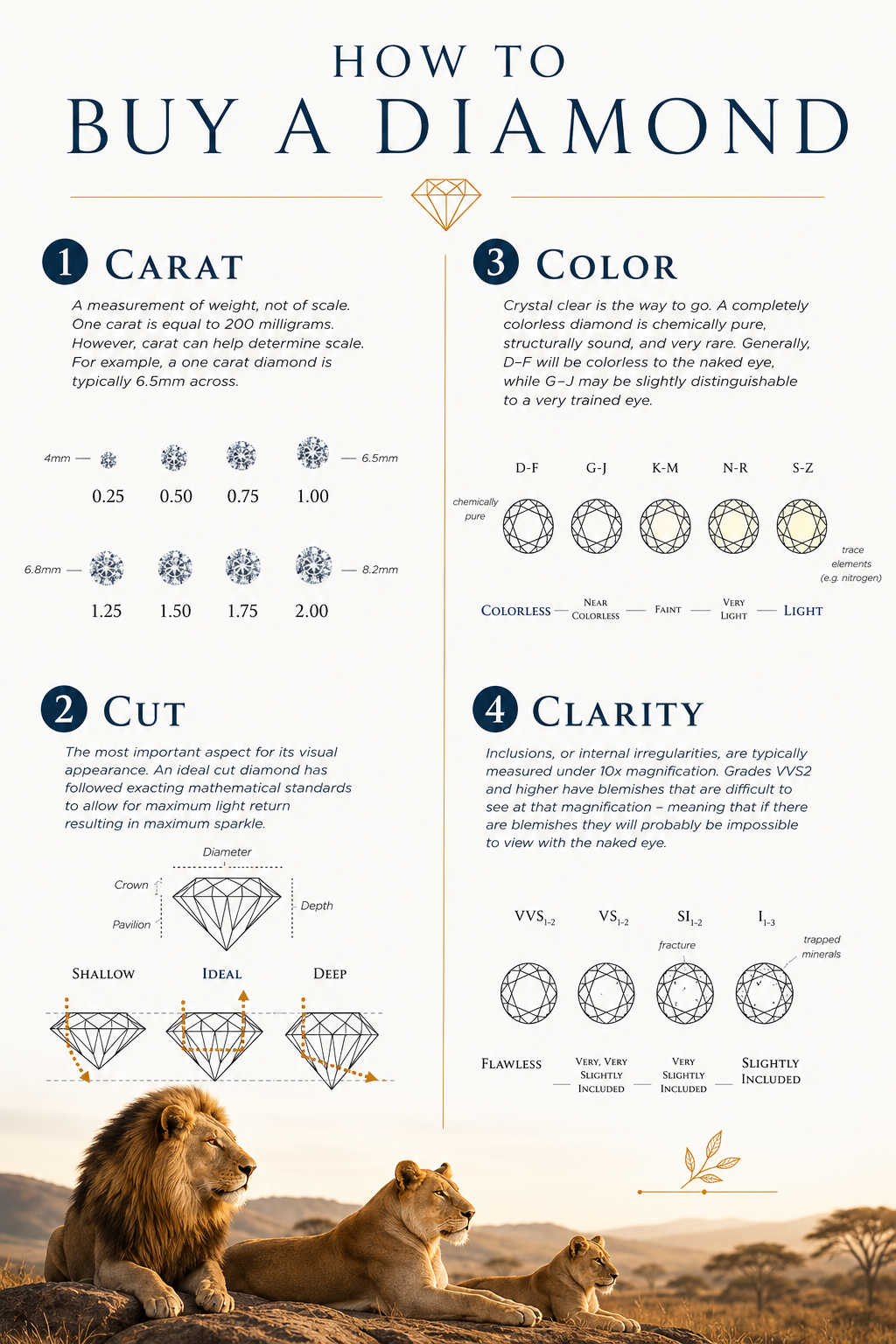
The Gemological Institute of America (GIA) developed the Four Cs grading system in the 1950s, and it remains the universal language for evaluating diamonds in 2026. The four factors are cut, color, clarity, and carat weight. Each one affects a diamond’s appearance and price differently, and knowing how they interact is the single most important thing you can learn before shopping.
Here’s the catch most people miss: these four factors aren’t equally important. A well-cut one-carat diamond will look more impressive than a poorly cut 1.3-carat stone every time. Smart buyers learn which Cs to prioritize and which ones to compromise on, saving thousands without any visible difference.
Cut: The Key to Brilliance and Fire
Cut is the most critical factor and the one you should never compromise on. It determines how light enters the stone, bounces around inside, and returns to your eye. A diamond with an excellent or ideal cut will display that signature sparkle, the flashes of white light (brilliance) and rainbow colors (fire) that make people stop and stare.
Cut grades range from Excellent/Ideal down to Poor. The difference between an Excellent and a Good cut grade is dramatic in person, even though it might only represent a 10-15% price difference. A poorly cut diamond leaks light out the bottom and sides, making it look dull and lifeless regardless of how high its other grades are. For round brilliants, always aim for GIA Excellent or AGS Ideal. For fancy shapes, cut grading is less standardized, so you’ll want to review images and videos of the actual stone.
Color and Clarity: Finding the Sweet Spot
Diamond color is graded on a D-to-Z scale, with D being completely colorless and Z showing noticeable yellow or brown tint. Here’s what most jewelers won’t volunteer: the difference between a D and a G color diamond is virtually invisible to the naked eye once the stone is set in a ring. You’re paying a 30-40% premium for a distinction only a gemologist with a loupe can detect.
Clarity works similarly. The scale runs from Flawless (FL) down to Included (I1-I3), measuring internal imperfections called inclusions. An SI1 (Slightly Included) diamond often looks identical to a VS1 (Very Slightly Included) stone to the unaided eye. The sweet spot for most buyers is the G-H color range and VS2-SI1 clarity range. You get a beautiful, clean-looking diamond at a significantly lower price than the top grades.
Carat Weight vs. Visual Size
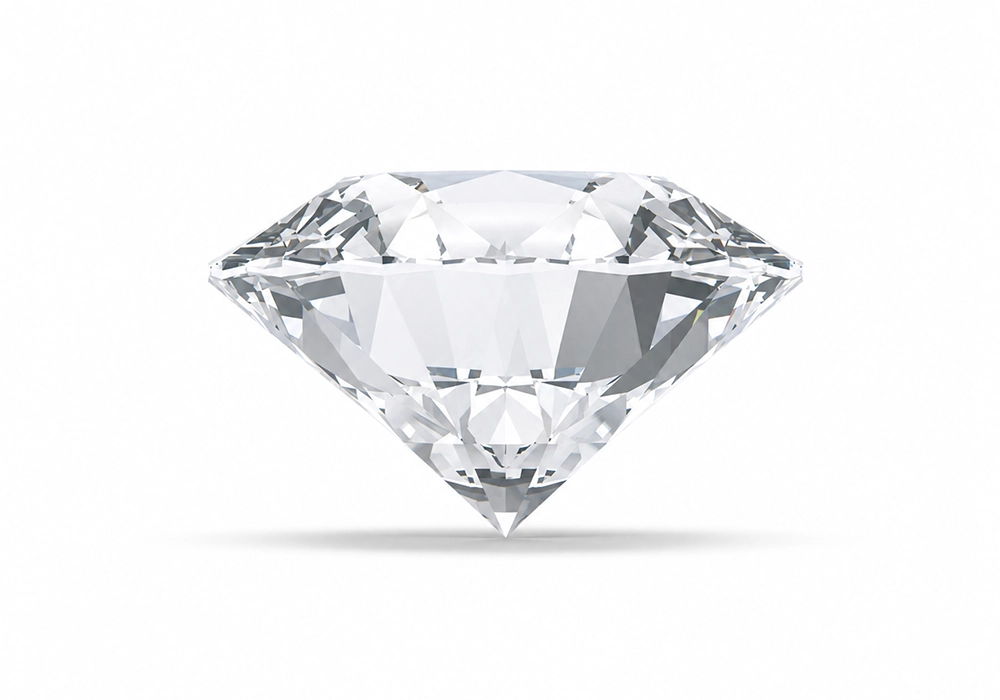
Carat is a unit of weight (one carat equals 0.2 grams), not a measurement of size. This distinction matters because two diamonds of the same carat weight can look different sizes depending on their cut and shape. An oval diamond, for example, typically appears 10-15% larger than a round diamond of the same weight because its elongated shape covers more surface area on the finger.
Price jumps at “magic numbers” like 0.50, 1.00, 1.50, and 2.00 carats. A 0.98-carat diamond can cost 15-20% less than a 1.00-carat stone of identical quality, and no one can tell the difference visually. Buying just under these thresholds is one of the simplest ways to save money.
Popular Diamond Shapes and Cutting Styles
Shape is the most personal choice you’ll make, and it has a major impact on the ring’s overall look. Each shape reflects light differently, flatters different hand types, and carries its own aesthetic personality. Trends shift over time, but the best approach is to choose a shape that resonates with the person wearing it rather than chasing what’s popular on social media this month.
Timeless Classics: Round and Princess Cuts
The round brilliant remains the most popular diamond shape in 2026, accounting for roughly 60% of all engagement ring purchases. Its 57 or 58 facets are mathematically optimized for maximum light return, which is why it sparkles more than any other shape. The tradeoff is price: round brilliants command a premium of 25-35% over fancy shapes because more rough diamond is lost during cutting.
Princess cuts are the second most popular choice. They’re square (or slightly rectangular) with pointed corners and offer excellent brilliance at a lower price per carat than rounds. One practical note: the pointed corners of a princess cut are vulnerable to chipping, so a setting with corner prongs is essential for protection.
Fancy Shapes: Oval, Pear, and Marquise
Oval diamonds have surged in popularity over the past several years, and for good reason. They offer a larger face-up appearance than rounds of the same weight, they elongate the finger, and they deliver impressive sparkle. The key concern with ovals is the “bow-tie effect,” a dark shadow across the center that appears in poorly cut stones. Always inspect an oval diamond’s image or video before buying.
Pear-shaped diamonds combine the round brilliant’s sparkle with an elegant, tapered point. They’re striking in solitaire settings and work beautifully as pendants too. Marquise cuts, with their two pointed ends and elongated body, maximize carat weight better than almost any other shape, making a half-carat stone look surprisingly substantial.
Vintage Appeal: Emerald and Cushion Cuts
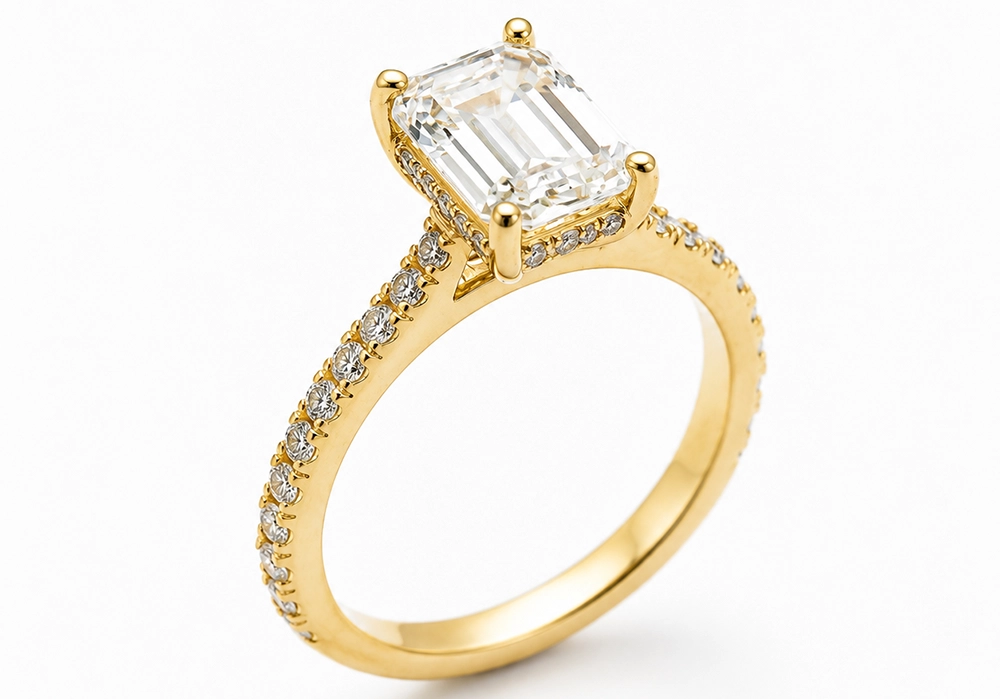
Emerald cuts are a completely different animal. Instead of the small, fiery flashes of a brilliant cut, they produce long, mirror-like reflections called the “hall of mirrors” effect. This step-cut style is elegant and understated, but it’s also less forgiving of lower clarity grades because inclusions are easier to spot through the large, open facets. If you choose an emerald cut, consider bumping clarity up to VS2 or higher.
Cushion cuts blend a square shape with rounded corners, creating a soft, romantic look. They come in two varieties: brilliant cushions (more sparkle) and modified cushions (a slightly different facet pattern). Cushion cuts tend to retain more color than rounds, so if you’re choosing a cushion, leaning toward the G-H color range or higher is a smart move.
Choosing the Right Metal and Setting Style
The metal and setting you choose affect not just the ring’s appearance but also its durability, maintenance requirements, and how the diamond itself looks. A warm-toned metal can make a near-colorless diamond appear slightly warmer, while a cool-toned metal can make a faintly tinted stone look more colorless. These aren’t just aesthetic decisions: they’re practical ones.
Prong, Bezel, and Halo Settings
A prong setting (also called a claw setting) is the most common choice. Four or six metal prongs hold the diamond above the band, allowing maximum light to enter from all angles. This produces the most sparkle but also leaves the diamond more exposed to bumps and snags.
Bezel settings wrap a thin metal rim around the entire perimeter of the diamond. They’re significantly more protective and ideal for people with active lifestyles, though they do reduce some light entry from the sides. Halo settings surround the center stone with a ring of smaller diamonds, adding visual size and sparkle. A halo can make a 0.80-carat center stone look like a full carat, which is a smart budget strategy.
Comparing Platinum, Gold, and Rose Gold
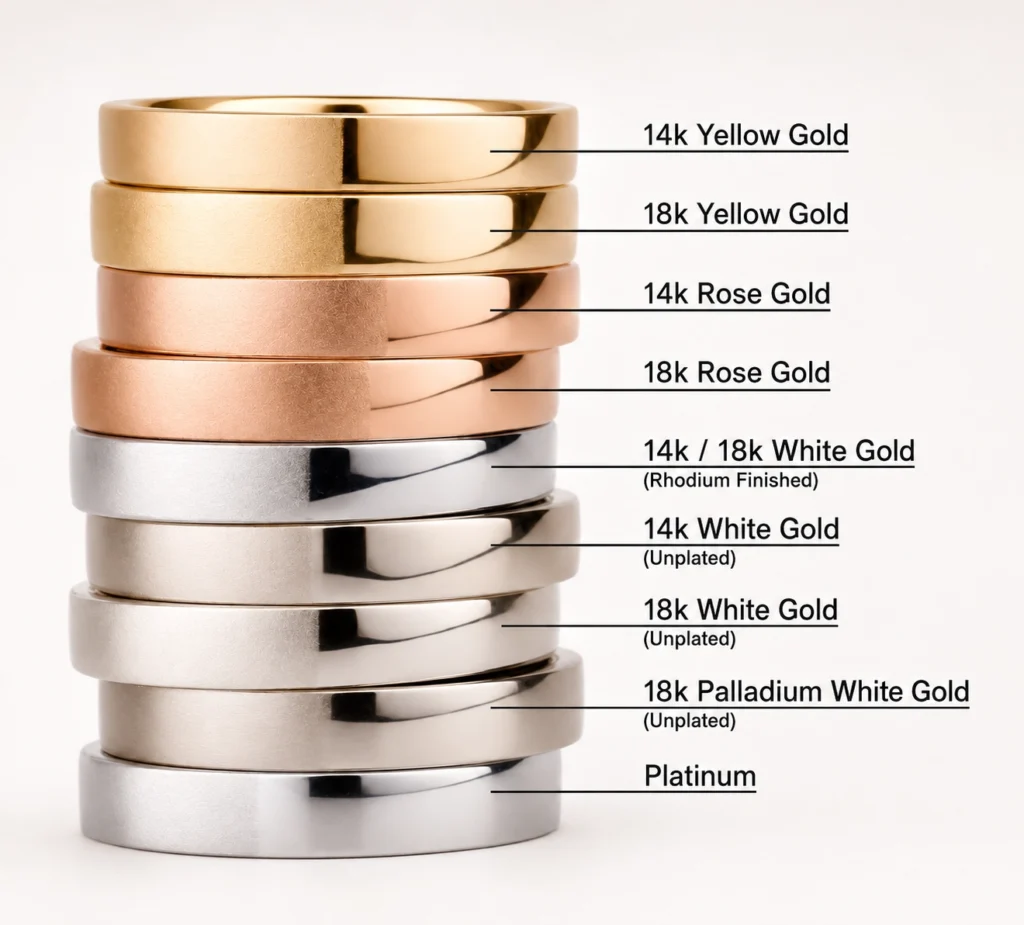
- Platinum: The most durable and hypoallergenic option. It’s naturally white, won’t fade or change color, and holds prongs more securely than gold. The downside is cost, typically 40-60% more than 14k white gold, and it develops a patina over time that some love and others don’t.
- White gold: An alloy of gold and other white metals, plated with rhodium for a bright white finish. It’s more affordable than platinum but requires re-plating every 1-3 years as the rhodium wears off.
- Yellow gold: Classic and warm. It pairs beautifully with lower-color diamonds (J-K range) because the warm tones complement each other rather than creating contrast.
- Rose gold: A gold-copper alloy with a pinkish hue that’s been trending strongly. It’s durable and flattering on many skin tones, though it can emphasize warmth in a diamond’s color.
For most buyers, 14k gold (in any color) offers the best balance of durability, appearance, and affordability. 18k gold is softer and more prone to scratching but has a richer color.
Natural vs. Lab-Grown Diamonds
This is the question that defines diamond shopping in 2026. Lab-grown diamonds are chemically, physically, and optically identical to mined diamonds. They’re real diamonds by every scientific measure. The only difference is origin: one formed over billions of years underground, the other was created in a lab over a few weeks.
The price gap has widened dramatically. Lab-grown diamonds now cost 80-90% less than comparable natural stones, a shift from the 30-40% gap that existed just a few years ago. A one-carat lab-grown round brilliant with excellent cut, G color, and VS2 clarity might run $500-$800 in 2026, while a comparable natural diamond could cost $5,000-$7,000.
The tradeoff is resale value. Natural diamonds retain some resale value (though far less than most people assume, typically 30-50% of retail). Lab-grown diamonds currently have almost no resale market because production costs keep falling and supply keeps growing. If long-term financial value matters to you, natural is the safer bet. If you want maximum size and beauty for your budget and don’t plan to resell, lab-grown is hard to argue against.
Neither choice is objectively better. It comes down to what matters to you: tradition and rarity, or value and size.
Budgeting and Smart Shopping Strategies
Forget the outdated “three months’ salary” rule. That was invented by De Beers’ marketing department in the 1930s, and it has no bearing on what you should actually spend. The right budget is whatever you can afford without going into debt or sacrificing other financial goals.
The average engagement ring purchase in the U.S. in 2026 falls between $5,000 and $7,000, but there’s enormous variation. A beautiful, well-chosen ring can absolutely be found for $2,000-$3,000, especially if you’re strategic about the Four Cs and open to lab-grown options.
Prioritizing Features to Maximize Value
The single best strategy is to prioritize cut above everything else, then allocate your remaining budget across color, clarity, and carat weight based on what’s visible to the naked eye. Here’s a practical framework:
- Start with Excellent/Ideal cut: this is non-negotiable.
- Choose a shape that maximizes perceived size if budget is tight (oval, marquise, or pear).
- Select G-H color and VS2-SI1 clarity: the “eye-clean” sweet spot.
- Buy just below carat weight thresholds (0.90 instead of 1.00, 1.40 instead of 1.50).
- Consider a halo setting to boost visual size without increasing diamond cost.
Online retailers like James Allen, Blue Nile, and Brilliant Earth typically offer prices 20-40% lower than brick-and-mortar stores because of lower overhead. The ability to inspect high-resolution 360-degree videos of each stone before buying has made online diamond shopping reliable and transparent.
The Importance of GIA and IGI Certification
Never buy a diamond without an independent grading report. The two most trusted labs are GIA (Gemological Institute of America) for natural diamonds and IGI (International Gemological Institute) for lab-grown diamonds. These reports confirm the diamond’s exact specifications and protect you from overpaying for a misrepresented stone.
Be cautious with reports from lesser-known labs, as grading standards vary. A diamond graded G color by one lab might be graded I or J by GIA. The few hundred dollars you might save buying a diamond with a less reputable certificate could cost you thousands in actual quality difference. GIA and IGI reports are your insurance policy.
Caring for Your Engagement Ring Investment
A diamond is extremely hard (10 on the Mohs scale), but the metal setting and the diamond itself still need regular care. Diamonds attract grease and oil from your skin, which dulls their sparkle over time. A simple cleaning routine makes a dramatic difference.
Clean your ring at home every two weeks by soaking it in warm water with a few drops of mild dish soap for 20-30 minutes, then gently scrubbing with a soft toothbrush. Pay special attention to the underside of the diamond and around the prongs where grime accumulates. Rinse thoroughly and pat dry with a lint-free cloth.
Take your ring to a jeweler for professional inspection and cleaning twice a year. They’ll check for loose prongs, worn metal, and any developing issues that could lead to losing your stone. Most jewelers offer this service free or for a nominal fee. Get ring insurance through a specialty provider like Jewelers Mutual or through your homeowner’s or renter’s policy. A standard policy costs about 1-2% of the ring’s value per year and covers loss, theft, and damage.
Remove your ring during activities that expose it to chemicals (cleaning products, chlorine), heavy impact (weightlifting, gardening), or abrasives. Store it in a separate soft pouch or compartment to prevent it from scratching other jewelry.
A well-maintained engagement ring will look as brilliant in 30 years as it did the day it was purchased. The small effort of regular cleaning and annual checkups protects both the beauty and the financial value of your investment.
Choosing the right diamond engagement ring doesn’t require a gemology degree. It requires understanding a handful of key principles: prioritize cut quality, buy in the sweet spot for color and clarity, choose a shape and setting that match the wearer’s style, and get proper certification. Whether you go natural or lab-grown, a $3,000 ring or a $15,000 ring, the same fundamentals apply. If you’re building a business around jewelry, weddings, or luxury goods, credibility is everything. Check out Notifyio.net to see how social proof tools can help build trust with your customers and turn browsers into buyers.
Disclaimer: This content is provided for general informational purposes only and does not constitute business, financial, tax, or legal advice. Specific concerns should be addressed with a qualified professional.